

Choosing a managed IT and cybersecurity provider often means sacrificing local support, continuous monitoring, or construction-specific features that matter for compliance and field operations. Most competitors either charge a premium for 24 by 7 security operations monitoring or exclude telecom, bid workflow, and legal documentation from standard packages. This comparison covers threat detection, compliance workflows, and field support across four providers so you can select a service that addresses both your security risks and project management needs.
Table of Contents
- Ventis Consulting Group
- ePlan Bidding
- Construction Management Enterprises (CMIS)
- Werx
- Comparing Managed IT and Cybersecurity Service Providers
Ventis Consulting Group
At a Glance
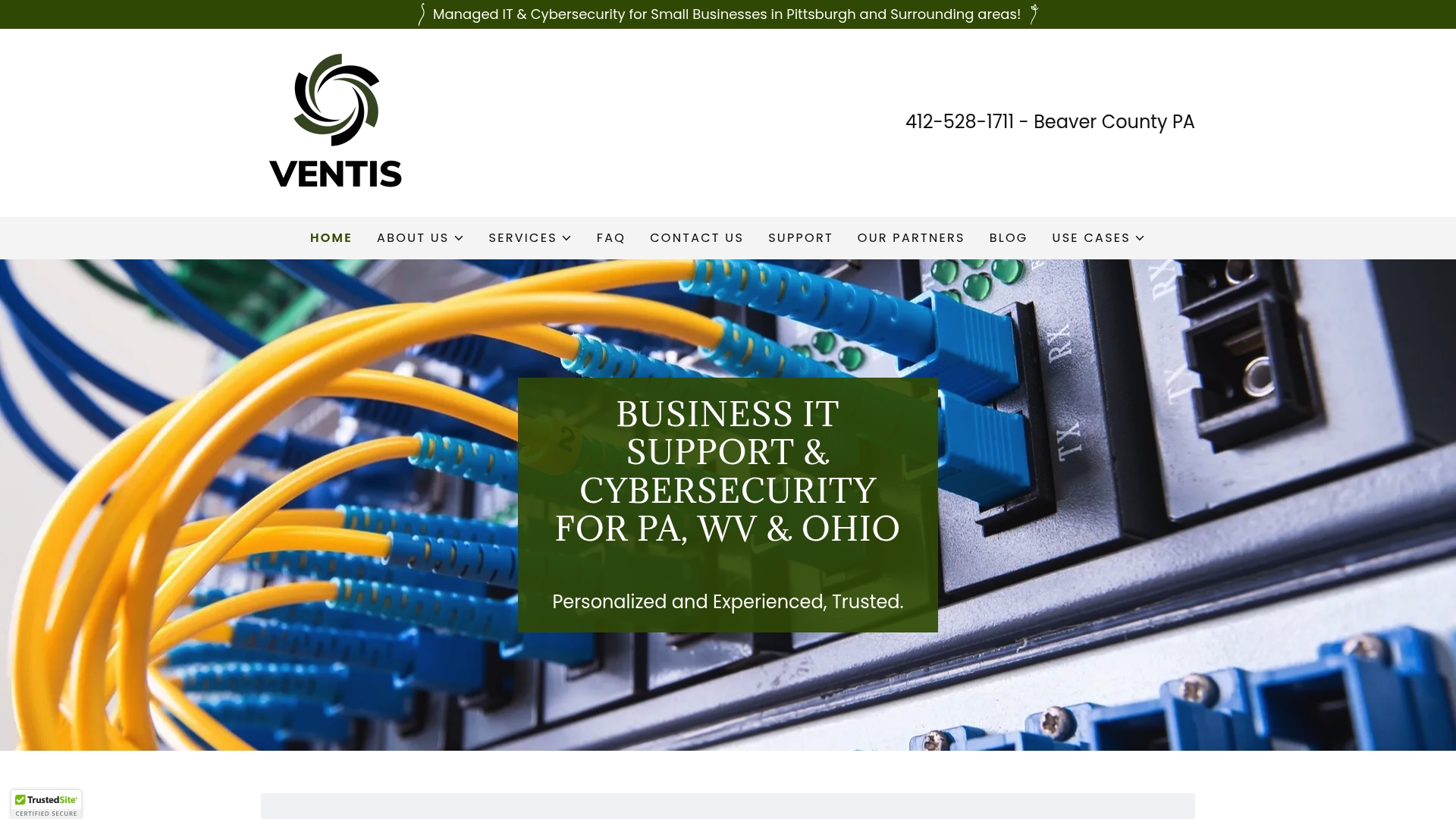
Includes enterprise-grade MDR and SOC monitoring as part of standard managed services — a capability many regional MSPs sell as an add-on. Ventis pairs that detection layer with local, consultative support focused on connectivity and operational reliability across Pittsburgh, Western PA, Ohio, and WV.
The vendor describes more than 20 years of IT and telecom experience and advertises a 5-star rating; that rating is a company claim. Their footprint targets small to mid-sized organizations in healthcare, legal, education, and government.
Core Features
- Managed IT support with proactive monitoring and on-site escalation for hardware and connectivity faults.
- Cloud solutions covering Microsoft 365, private and public cloud options, backups, and disaster recovery planning.
- Cybersecurity services including MDR, firewalls, penetration testing, and security assessments tailored for regulated sectors.
- Network services such as SD-WAN, managed WiFi, and cabling to stabilize distributed locations.
- Unified communications offering VoIP, Microsoft Teams Voice, contact center setups, and wireless phone support.
Key Differentiator
The single strongest capability is that enterprise-grade MDR and SOC monitoring are built into regular managed service plans, not tacked on. That placement makes threat detection a continuous operational function supported by local technicians rather than an occasional consultancy.
Pros
-
Local team presence speeds on-site response. For organizations in the Pittsburgh region, that reduces time to repair for network outages and hardware failures.
-
Built-in MDR gives small IT teams continuous monitoring without the procurement and integration overhead of a separate vendor.
-
Service set spans security, cloud, connectivity, and telecom so projects like a VoIP migration plus firewall refresh can be managed under a single accountable provider.
-
Tailored planning for HIPAA and regulated environments means the controls and backup workflows match compliance needs rather than relying on generic templates.
Cons
- Pricing is quote-based and not published; custom quotes may be costly for very small budgets and require a discovery process before you can compare cost across vendors.
Who It's For
Organizations with an on-site footprint in Western PA, Ohio, or WV that want an external team to own security operations and day-to-day IT. Good fit for healthcare practices, law firms, K–12 districts, and municipal offices that need local technicians plus managed detection.
Unique Value Proposition
Including continuous SOC monitoring and MDR inside the managed services agreement keeps threat hunting, alert triage, and incident escalation inside a single vendor contract. For small IT teams, that shifts security from an extra vendor line item to a service the local team runs for you.
Real World Use Case
A dental practice engaged Ventis to build HIPAA-aligned backups, manage endpoints, and replace an aging phone system with VoIP tied into Microsoft Teams Voice. The engagement reduced recovery time objectives and unified patient communication under a single support channel.
Pricing
Ventis uses a quote-based pricing model tailored to your environment and needs. Expect tiered service plans where response SLAs and included security monitoring vary by contract level; a discovery call is required to see specific pricing.
Website: https://ventisconsulting.com
ePlan Bidding
At a Glance
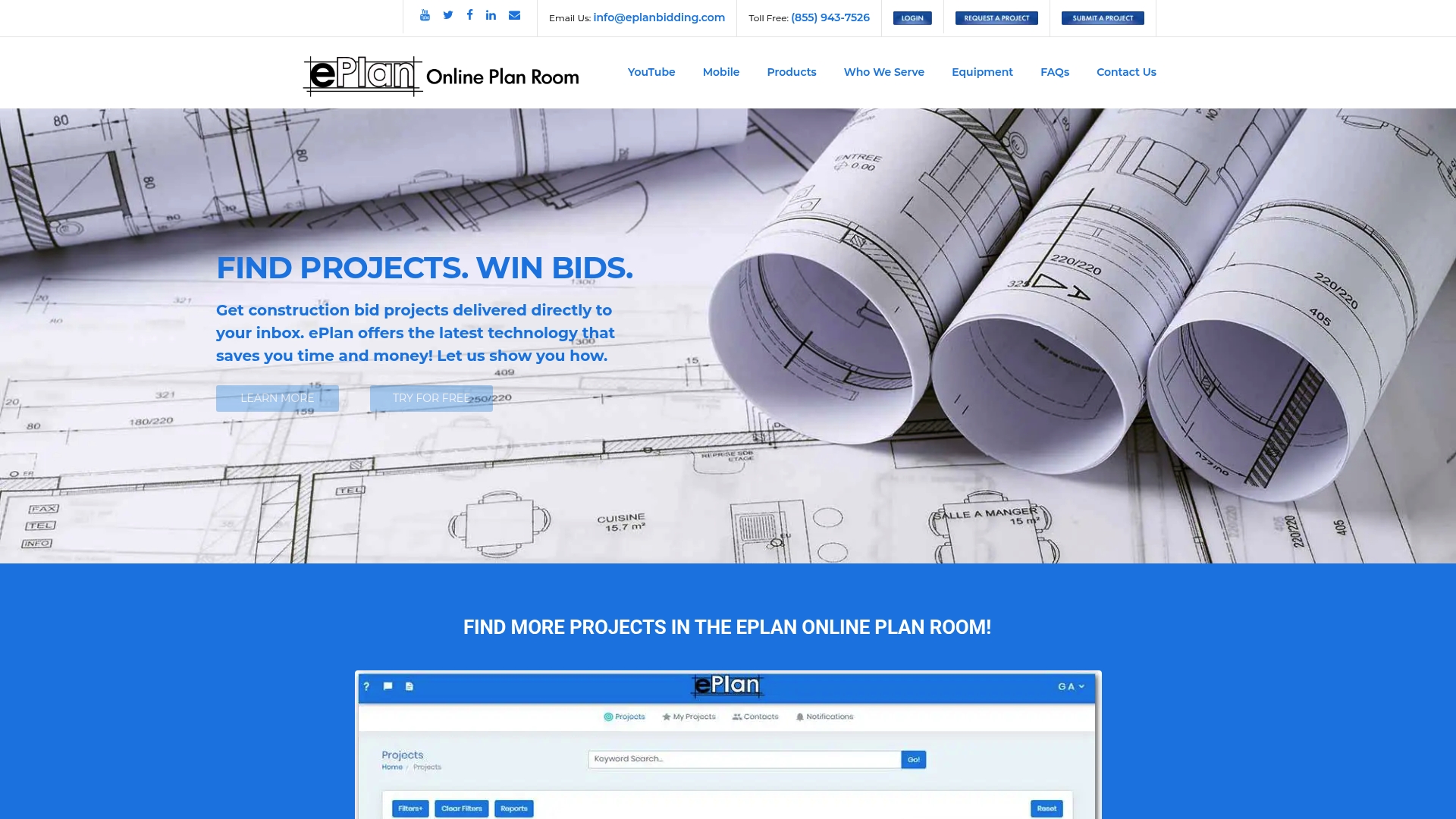
Offers on-demand construction graphics and signage print services alongside its bid marketplace, a practical add-on most competitors do not advertise. ePlan positions itself as a regional hub for finding and managing US construction bids, with features that target plan distribution and bidder communication. The vendor advertises automated bid notifications and official plan holder lists to reduce manual chasing.
Core Features
- Real-time project search with filters for region, trade, and bid dates so you find relevant opportunities quickly.
- Automated bid notifications and alerts that notify subscribers of new or updated projects matching saved searches.
- Official plan holder lists and document management to track who has downloaded plans and to centralize addenda.
- Bid invitation and communication tools that let you invite subs, message plan holders, and record replies.
- Print services for construction graphics and signage tied to project document sets.
Key Differentiator
The platform combines bidding workflow and document handling with on-site physical deliverables. That blend of digital plan room features plus print and graphics services targets firms that still depend on printed drawings, signage, and hard-copy coordination while running an online bid pipeline.
Pros
- The user-friendly interface focuses on construction workflows so crews and estimators spend less time learning menus and more time on bids.
- A broad regional project database helps small and mid-size firms surface local work without scouring municipal sites manually.
- Document handling and the plan holder roster make tracking addenda and distributor obligations easier when you must prove notification history.
- Built in communication and bid invitation tools reduce reliance on fragmented email threads for subs and vendors.
- Active support and regular updates mean platform quirks are addressed more often than on smaller, static plan rooms.
Cons
- Platform reach is concentrated in the United States, which limits value for contractors chasing international or multi‑country work.
- Subscription pricing can be costly for firms that bid infrequently or only need occasional plan downloads.
- Project density varies by region; some users report fewer relevant listings in less active markets.
When It May Not Fit
If your company pursues projects across multiple countries, ePlan’s US focus makes it a poor single-source solution. If you only buy plans occasionally, subscription tiers may not justify the cost. And if your estimating team depends on deep integrations with enterprise ERPs, the platform may feel standalone.
Who It's For
General contractors, subcontractors, material suppliers, and construction managers operating primarily in the United States who need a single place to discover local bids, manage plan distribution, and coordinate subresponses. Best for teams that still use printed drawings or require physical signage services.
Real World Use Case
A regional subcontractor subscribes to receive daily alerts for concrete and sitework bids within a 100 mile radius. They filter by bid date and trade, download the bid set, and use the plan holder list to invite two known estimators. The workflow shortens bid prep and improves follow up.
Pricing
ePlan uses a subscription model with multiple tiers and a free trial. Specific pricing details are provided on request and typically vary by subscription level and geographic coverage.
Website: https://eplanbidding.com
Construction Management Enterprises (CMIS)
At a Glance
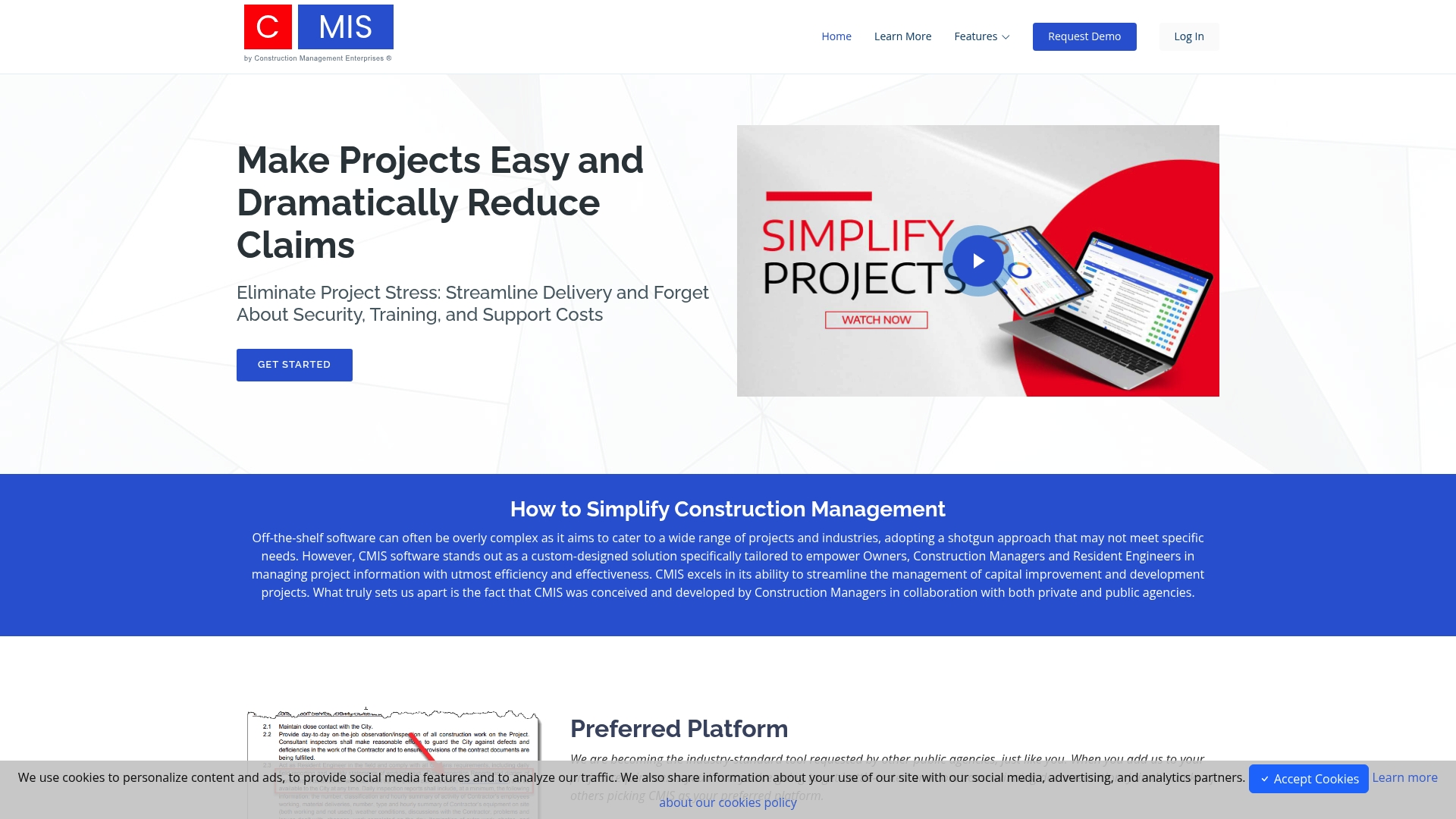
CMIS's marketing materials claim the system produces court-case winning documentation and targets public agency compliance with FHWA and Caltrans standards. The product is described as custom built by construction managers for Owners, Construction Managers, and Resident Engineers to reduce claims and speed project close-out.
Core Features
- Tailored construction management interface focused on project information oversight and document control.
- Project reporting modules that cut through monthly reporting chores and keep audit trails intact.
- Built-in support for FHWA and Caltrans compliance requirements to help with regulatory record keeping.
- Designed to reduce claims and accelerate project close-out through structured documentation and workflows.
Key Differentiator
CMIS was developed with hands-on input from construction managers and public agencies, which shapes its UI and record keeping around real on-site practices. That focus on legal defensibility and claim reduction separates it from general-purpose project trackers and aligns it with public works project needs.
Pros
- Specifically crafted by industry professionals so workflows mirror field routines rather than forcing office-style workarounds. This reduces configuration time for project teams.
- The interface is reported to be simple to use, lowering dependency on dedicated IT support and making adoption easier for Resident Engineers and Owners.
- Appeals to public agencies because the product emphasizes legal compliance and court documentation. That documentation claim above is a frequent selling point in procurement.
- Built-in capabilities aimed at reducing claims and speeding close-out reduce backlog on final deliverables and paperwork.
- Customizable enough to handle complex public infrastructure requirements without reengineering the tool for each project.
Cons
- There are no substantive third-party user reviews publicly available, which makes it hard to judge long-term satisfaction or adoption beyond vendor statements.
- Public documentation about integrations is sparse, so connecting CMIS to other construction tools or ERP systems is unclear.
- The vendor-claimed advantages rely heavily on internal design pedigree rather than independent validation, which raises questions for procurement teams that require market references.
When It May Not Fit
If your procurement rules require broad market validation or independent user ratings, CMIS could be a risky pick because of the lack of third-party reviews. If your program depends on a large ecosystem of plug-and-play integrations, the unclear integration picture above may force additional custom work.
Who It's For
Construction managers, project Owners, and Resident Engineers running public infrastructure or capital improvement programs who value compliance, defensible records, and a field-oriented interface. Ideal for agencies that prioritize legal documentation and reduce claims over extensive third-party app ecosystems.
Real World Use Case
A state transportation agency uses CMIS to manage multiple highway projects across districts. Project teams log daily records, change notices, and inspection reports into CMIS so close-out packets are assembly-ready, and legal teams can pull audit trails when disputes arise.
Pricing
Not applicable. The vendor positions CMIS as an informational offering for public agencies and project owners, with pricing and deployment details typically handled through direct procurement discussions and quotes.
Website: https://c-mis.com
Werx
At a Glance
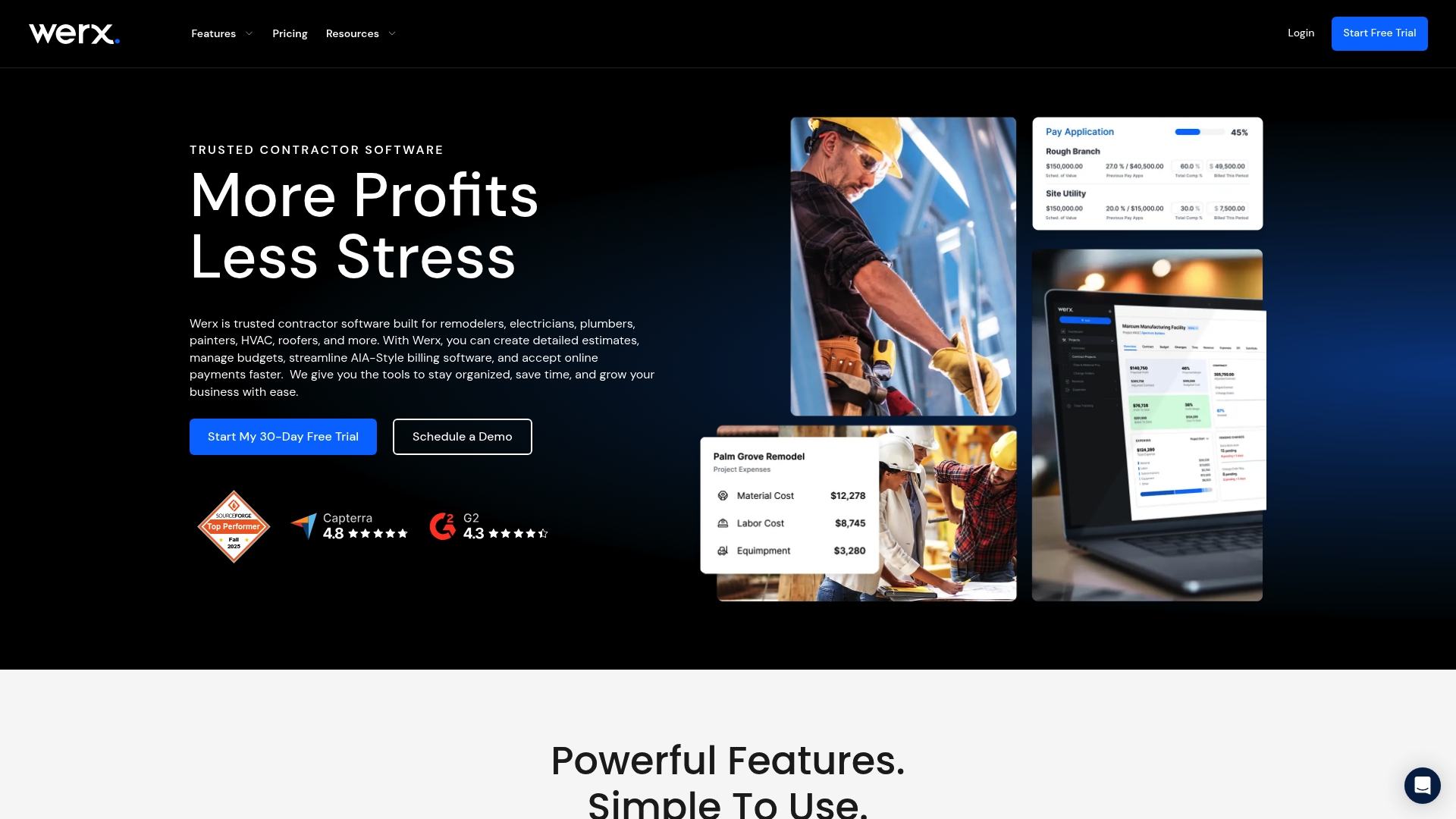
Werx puts AIA-style progress billing directly into contractor workflows while syncing job costs to QuickBooks Online. It packages proposals, progress billing, time and material invoicing, and a mobile field app aimed at small to mid-sized trade contractors.
Core Features
Werx supports flexible proposals for itemized or long-form estimates and tracks change orders so budgets stay visible across a job. The platform handles progress and AIA-style billing plus retainage management for staged invoices.
Time and material invoicing ties with on-site time tracking through the field app so labor costs post in near real time. The product advertises deep synchronization with QuickBooks Online to reduce duplicate bookkeeping.
Key Differentiator
Werx focuses on making AIA-style progress billing practicable for smaller contractors and connects those billing events directly into accounting. That design nods to remodelers and trade contractors who need staged invoicing, retainage handling, and clean job costing without heavy accounting workarounds.
Pros
- Users report the interface is straightforward for crews and office staff, which shortens training time and gets proposals out faster.
- QuickBooks Online synchronization reduces manual ledger entries and cuts the reconciliation work the office does at month end.
- The field app supports real-time job tracking and customer approvals so change orders and time records are captured where work actually happens.
- Supports both progress billing and time and material invoicing, making it useful for fixed price and T&M contracts.
- Customer service feedback in marketing materials is positive, which matters when your bookkeeping and billing depend on a reliable vendor.
Cons
- Public third-party review volume is limited, with only one Trustpilot review visible, so independent user feedback is scarce.
- Pricing details are not published in the available product materials, which forces direct contact for cost comparisons.
- The vendor does not list specific unsupported features, leaving gaps that prospective buyers must verify in demos.
When It May Not Fit
If you run a large general contracting firm with complex multi-office cost centers and advanced resource planning, Werx may feel narrow. It is aimed at small to mid-sized contractors; enterprises that need enterprise resource planning features should look elsewhere.
Notable Integrations
- QuickBooks Online: bidirectional sync for invoices, payments, and job cost entries.
Who It's For
Werx fits small to mid-sized remodelers, electricians, plumbers, HVAC contractors, roofers, and similar trades that handle progress billing or invoice by time and material and want tighter ties between the field and accounting.
Real World Use Case
A remodeling contractor uses Werx to create itemized proposals, capture crew hours with the field app, issue AIA-style progress invoices as milestones are met, and push finalized charges into QuickBooks so AP and job costing reconcile faster.
Pricing
Werx does not publish standard pricing in the available materials. The vendor notes a free trial is available but full pricing brackets require contacting sales or requesting a demo.
Website: https://werxapp.com
Comparing Managed IT and Cybersecurity Service Providers
Selecting the right managed IT and cybersecurity service provider from the array of available options can be challenging. Each provider highlights distinct features tailored to specific industries and operational needs. Here, we analyze the strengths and trade-offs among Ventis Consulting Group, ePlan Bidding, CMIS, and Werx to assist organizations in making an informed choice.
Superior Integration of Security and Managed Services
Ventis Consulting Group offers an integrated approach, merging high-level Managed Detection and Response (MDR) with managed IT services. Unlike CMIS or Werx, which focus on aspects such as legal compliance or contractor billing, Ventis embeds security measures like 24/7 SOC monitoring directly within their core services. This allows businesses, particularly in sectors requiring HIPAA compliance, to maintain secure and reliable operations without needing additional specialist vendors for threat detection.
Specialization and Industry Focus
For companies needing solutions for public construction compliance, CMIS stands out due to its tailored workflows for legal documentation and claims reduction. Its regulatory alignment with the Federal Highway and Caltrans standards provides advantages not found in organizations such as ePlan Bidding, which emphasizes bid management and related document handling rather than full regulatory compliance.
Targeted Versatility
Werx provides simplified solutions for AIA-inspired billing tailored to small-scale contractors seeking synchronized financial operations with QuickBooks Online. This targeted approach differentiates it from Ventis and ePlan Bidding, which cater more along operational IT management and bid pipeline management rather than financial reconsolidation and tracking of specific contractor financial workflows. This makes Werx a reliable choice for smaller teams needing straightforward operational accountability.
Best Fit
- Ventis Consulting Group: Practical for mid-sized healthcare, education, or legal firms with localized physical presences in Ohio, WV, or Pennsylvania, requiring a full-service IT and SOC vendor.
- ePlan Bidding: Best suited for medium contractors and subcontractors pursuing U.S. construction bids with substantiated document and addendum workflows.
- CMIS: Excellent for agencies running public infrastructure projects requiring compliance-focused document workflows aligned to Caltrans and FHWA regulations.
- Werx: Appropriate for small contractors needing integration of fieldwork activity tracking with QuickBooks Online for accurate billing and cost management.
Our Pick
For organizations prioritizing integrated security and managed services tailored to mid-sized entities in regulated or specialized sectors, Ventis Consulting Group excels. With its incorporation of enterprise-grade MDR and network reliability monitoring into foundational services, it ensures a experience in operational IT and security management. However, for constructors focusing narrowly on compliance documentation or financial tracking of project costs, CMIS or Werx respectively may offer greater alignment with specialized business needs. This highlights the importance of individual requirements when deciding on a service provider.
Managed IT and Cybersecurity Services Comparison
Evaluating managed IT and cybersecurity solutions necessitates considering integrated features and tailored support for diverse operational needs.
| Provider | Core Features | Key Differentiator | Best For | Notable Limitation |
|---|---|---|---|---|
| Ventisconsulting | Managed IT, cybersecurity (MDR), cloud solutions, unified communications | MDR and SOC included in standard plans | SMBs needing local support for compliance | Quote-based pricing requires assessment |
| ePlan Bidding | Bid search, notifications, document management, construction print services | Combines digital bidding tools with physical print services | Construction teams seeking bid tracking | Focuses largely within the United States market |
| CMIS | Compliance-focused project documentation, public agency standards | Tailored for FHWA and Caltrans compliance | Public infrastructure projects | Lack of user reviews introduces uncertainty |
| Werx | Itemized estimates, AIA-style billing, QuickBooks Online integration | Simplifies complex billing processes for small to mid-size firms | Trade contractors specialized in tasks | Limited independent assessments and pricing information |
Finding Reliable IT Solutions Beyond Projects.constructconnect.com Alternatives
The search for dependable project management and collaboration tools like projects.constructconnectconnect.com can highlight the need for robust IT support and security — especially for small to mid-sized businesses in Pittsburgh and nearby areas. Ventisconsulting understands these challenges and delivers managed IT services that include local, consultative help with continuous cybersecurity monitoring and connectivity tailored to your business demands.
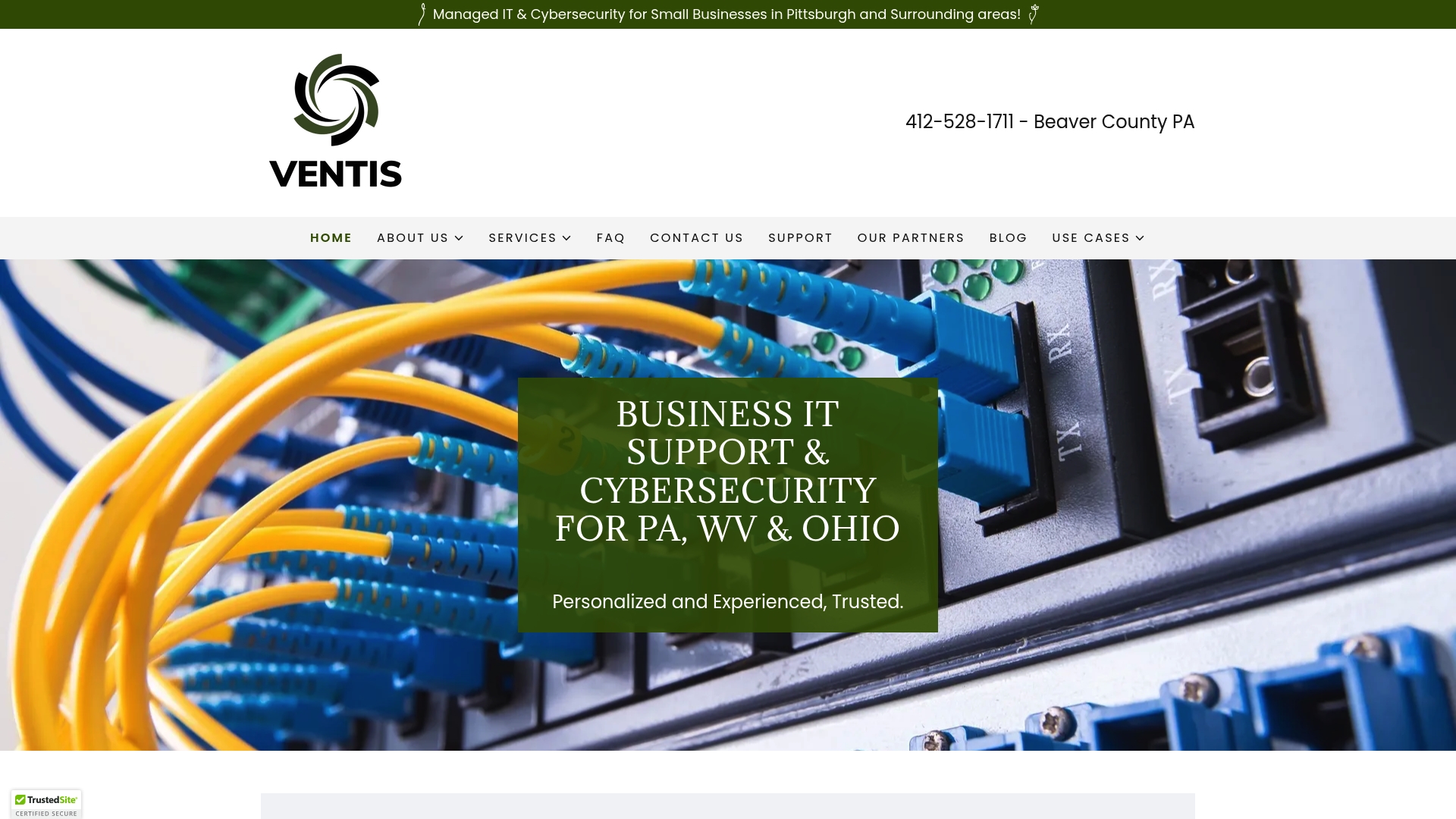
Choose Ventisconsulting to reduce the complexity of managing multiple vendors while protecting your data and maximizing productivity. Visit Ventis Consulting Group to explore how their personalized IT and cybersecurity solutions can free you from technology guesswork. Book a consultation today and secure your environment with enterprise-grade MDR and SOC monitoring integrated into your IT support.
Frequently Asked Questions
What are the benefits of using Ventis Consulting Group's managed IT support services?
Ventis Consulting Group offers proactive monitoring and on-site escalation for hardware and connectivity faults, ensuring quick responses to issues. Their managed IT support includes built-in enterprise-grade MDR and SOC monitoring, making security operations a continuous function. For organizations needing swift assistance, this integrated approach is highly effective.
How does Ventis Consulting Group compare to ePlan Bidding in terms of service offerings?
While ePlan Bidding provides a user-friendly platform focused on construction project bids and document management, Ventis Consulting Group's strength lies in its comprehensive managed IT and cybersecurity services for small to mid-sized organizations in regulated sectors. Ventis is ideal for healthcare practices and law firms needing ongoing IT management and security support rather than just bidding solutions.
Can Ventis Consulting Group's services help my organization with HIPAA compliance?
Yes, Ventis Consulting Group tailors its cybersecurity services specifically for regulated sectors, including support for HIPAA compliance in healthcare environments. Their controls and backup workflows are designed to meet compliance needs efficiently. Organizations can expect reliable support in navigating regulatory requirements.
What kind of pricing model does Ventis Consulting Group use for its services?
Ventis Consulting Group employs a quote-based pricing model tailored to the specific needs and environments of its clients. This model ensures that organizations receive a customized approach, but potential clients should prepare for a discovery process to understand costs better.
Is the local team presence of Ventis Consulting Group advantageous for on-site support?
Yes, Ventis Consulting Group's local team presence significantly speeds up on-site responses for organizations in the Pittsburgh region. This capability reduces downtime due to network outages and hardware failures, making it a practical choice for businesses requiring immediate on-the-ground support.