
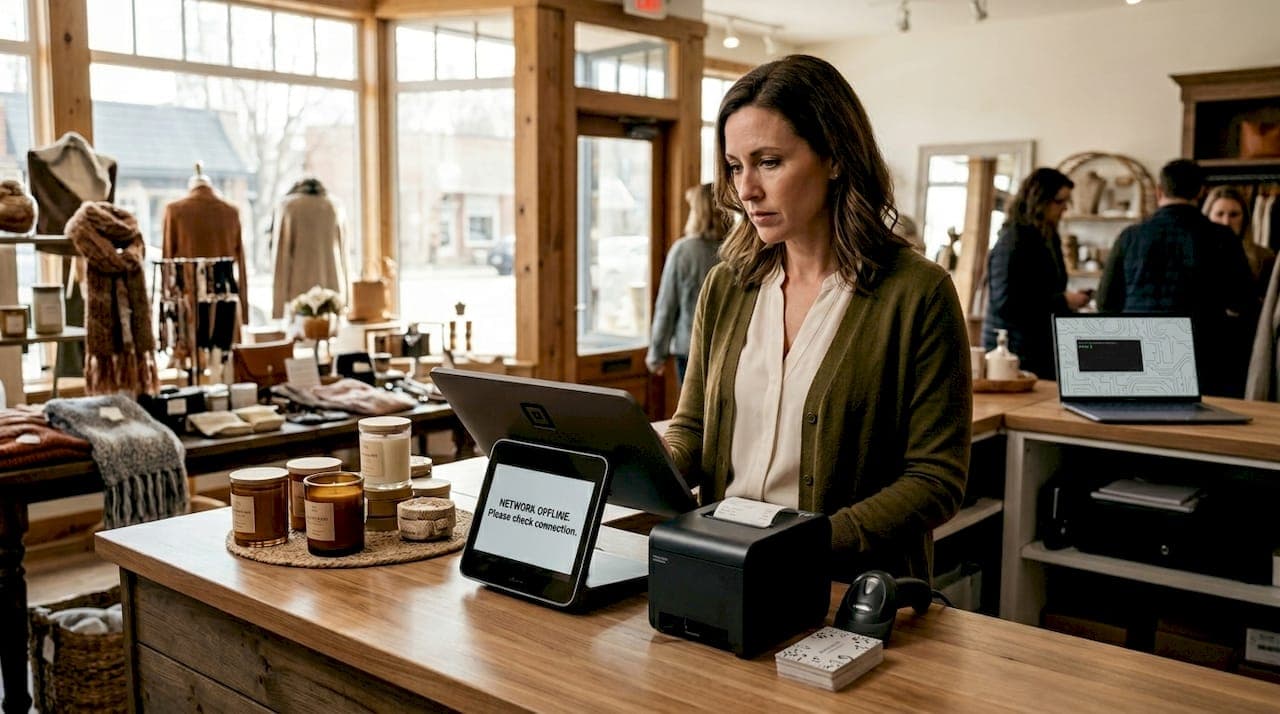
Retail is the most targeted sector for cybercrime, and the numbers are not abstract. Cybercrime caused $20.9 billion in losses in 2025, with attacks growing more sophisticated every quarter. If you run a retail business, whether a single storefront or a multi-location operation, understanding why retail cybersecurity is important is no longer optional. It is the difference between a business that survives a breach and one that closes because of it. This article breaks down the real risks, what is at stake for your customers, and what you can do about it right now.
Table of Contents
- Key Takeaways
- Key cyber risks facing retail businesses today
- Why customer trust depends on your security
- Best practices to strengthen your retail security
- Challenges retail businesses face with cybersecurity
- My take on cybersecurity as a business enabler
- How Ventisconsulting can protect your retail business
- FAQ
Key Takeaways
| Point | Details |
|---|---|
| Retail is a prime target | Cybercriminals specifically exploit retail's complex systems, high transaction volumes, and seasonal workforce. |
| Customer trust is on the line | 58% of consumers lose trust after a data breach, making security a direct driver of revenue. |
| Compliance is now continuous | PCI DSS 4.0 treats compliance as a daily operational requirement, not a once-a-year audit. |
| AI is both threat and defense | Attackers use AI to scale fraud; defenders use it to block millions of attacks automatically. |
| Small retailers are not exempt | High employee turnover and legacy systems make smaller retail businesses especially vulnerable to breaches. |
Key cyber risks facing retail businesses today
Retail businesses face a threat environment that is more complex than most owners realize. It is not just about hackers trying to steal credit card numbers. The attacks have become targeted, automated, and financially devastating.
Here is what you are actually up against:
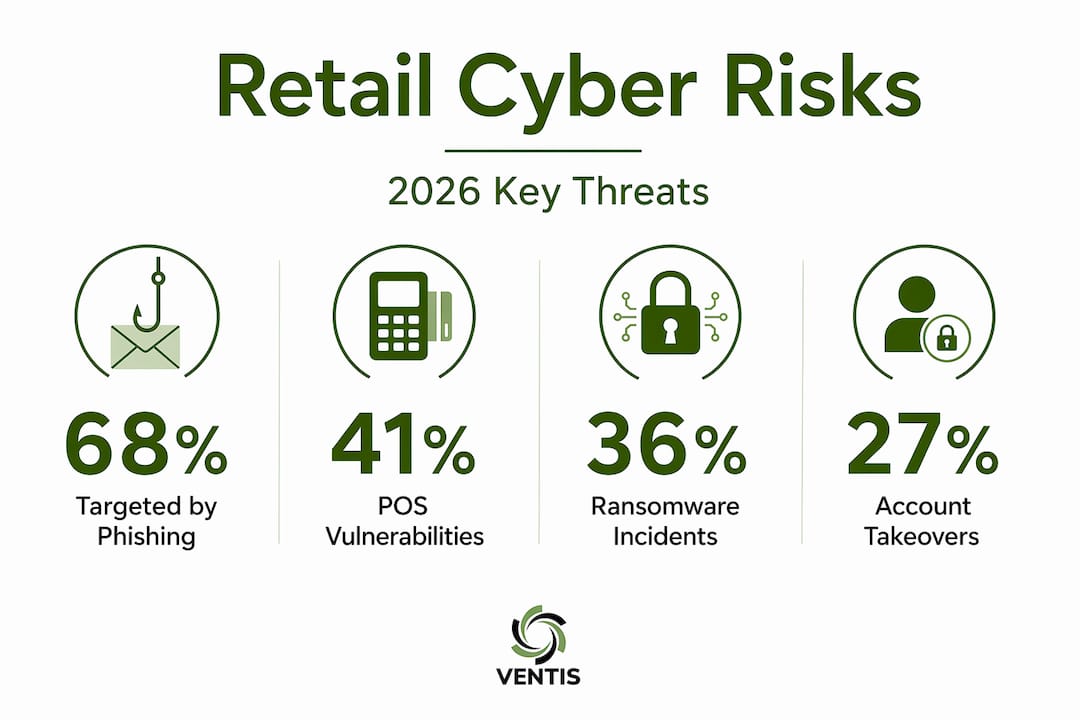
- Ransomware and account takeover. Account takeover losses reached nearly $360 million in a single year, accounting for 19% of all reported cybercrime losses. Worse, those figures are likely a fraction of the real damage. Actual losses are estimated to be 3 to 5 times greater than what gets formally reported, because most victims never file complaints after being reimbursed by their bank.
- Phishing and AI-powered social engineering. Attackers now use AI to craft spear phishing emails that look exactly like messages from your vendors, payroll provider, or bank. A single employee clicking the wrong link can hand over network access in seconds.
- Point of sale vulnerabilities. Your POS system security is a direct gateway to payment data. Outdated terminals, unpatched software, and weak network segmentation turn every transaction into a potential exposure.
- Bot fraud targeting loyalty programs and returns. Organized crime uses bots to exploit return policies and loyalty programs at scale, liquidating cash reserves through refund fraud. This is not a theoretical risk. It is happening to retailers right now.
- Third-party and vendor risks. Your cybersecurity is only as strong as your weakest vendor. If a supplier or software partner gets breached, your customer data can be exposed without anyone touching your systems directly.
AI is now the top cybersecurity issue for retailers in 2026, enabling attackers to launch large-scale brute force attacks that would have required entire criminal teams just a few years ago. The speed and scale of modern attacks have changed the calculus entirely.
Why customer trust depends on your security
The importance of retail cybersecurity goes well beyond avoiding fines or downtime. It sits at the center of your relationship with every customer who walks through your door or visits your website.
Consider this: 83% of consumers prioritize data protection when choosing where to shop. That means most of your customers are already making purchasing decisions based on how much they trust you with their information. A breach does not just cost you money in the short term. It costs you the customers who decide never to come back.
"Trust is now the most valuable currency for retailers amid digital transformation and AI-powered threats." — Retail cybersecurity and trust insights
The competitive angle here is real. Retailers who can demonstrate strong data protection practices have a genuine advantage in an omnichannel environment where 74% of US consumers browse and 73% purchase across both digital and physical channels. Those customers are sharing data at every touchpoint. They want to know it is safe.
There are also legal and regulatory stakes. Depending on your state and the type of data you collect, a breach can trigger mandatory customer notifications, regulatory investigations, and civil liability. The costs compound quickly. Legal fees, forensic investigations, credit monitoring for affected customers, and potential fines can easily run into six figures for a mid-sized retailer.
The benefits of cybersecurity in retail are not just defensive. A strong security posture lets you expand into new channels, accept more payment types, and build loyalty programs without fear. Security becomes the foundation that makes growth possible.
Best practices to strengthen your retail security
Knowing the risks is one thing. Knowing what to do about them is where most retail business owners need practical guidance. Here is a framework that works in the real world, not just in theory.
- Treat PCI DSS 4.0 as an everyday operation, not an annual checkbox. PCI DSS 4.0 shifts compliance to a continuous requirement that affects daily store functions. Non-compliance can stop transactions outright and expose you to serious penalties. Build compliance into your daily workflows rather than scrambling before an audit.
- Adopt zero-trust network architecture. Zero trust means no device or user is automatically trusted, even inside your network. Segment your POS systems, back-office computers, and guest Wi-Fi so that a breach in one area cannot spread across your entire operation.
- Require multifactor authentication (MFA) on everything. MFA on email, admin accounts, and payment systems stops the majority of credential-based attacks cold. It takes minutes to set up and blocks threats that would otherwise cost you thousands.
- Run regular employee security training. Your staff is your first line of defense and your biggest vulnerability. Short, frequent training sessions on spotting phishing emails and handling customer data correctly are far more effective than a single annual seminar.
- Audit your vendors and third-party software. Ask every vendor for their security certifications and breach history. Limit the access each vendor has to only what they need. Review these permissions at least twice a year.
- Deploy AI-driven threat detection tools. AI can automate the blocking of millions of low-level attacks that would overwhelm a human security team. Tools like security information and event management platforms give you real-time visibility into what is happening across your network.
Pro Tip: Start your security improvements with a free or low-cost cybersecurity assessment. Understanding where your gaps are is the fastest way to prioritize your budget and avoid wasting money on tools you do not actually need.
Challenges retail businesses face with cybersecurity
Understanding why businesses need cybersecurity is easier than actually implementing it, especially in retail. The industry has some structural challenges that make security genuinely hard.
| Challenge | Why it matters | Practical response |
|---|---|---|
| High employee turnover | New staff often miss training on phishing and data handling | Use short onboarding security modules, not long annual sessions |
| Seasonal hiring spikes | Temporary workers increase exposure during peak periods | Limit system access for seasonal staff to only what their role requires |
| Legacy POS and patchwork systems | Older infrastructure resists uniform policy enforcement | Prioritize network segmentation to contain damage from outdated endpoints |
| Third-party vendor sprawl | Each vendor is a potential entry point | Maintain a vendor access register and review it quarterly |
High employee turnover and seasonal hiring create real training and enforcement challenges that larger enterprises simply do not face at the same scale. A new cashier who does not recognize a phishing email is not a personal failure. It is a systemic risk that needs a systemic response.
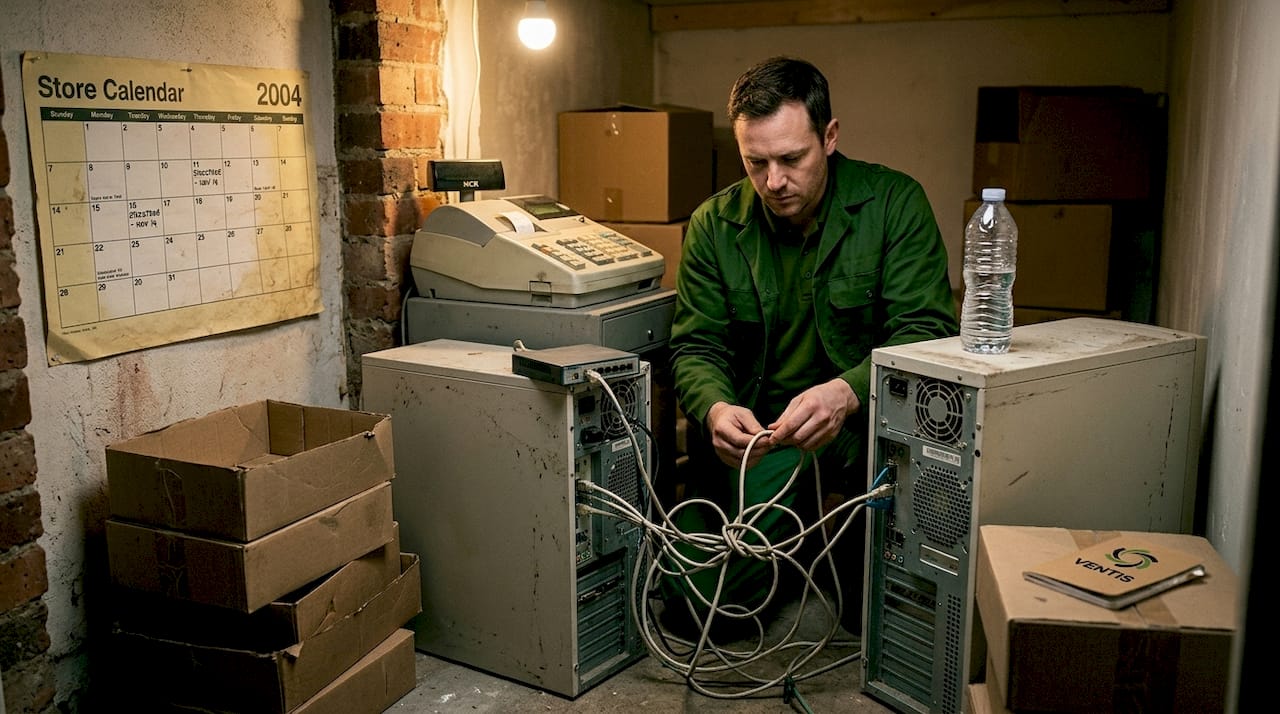
Legacy retail IT infrastructure is another persistent problem. Many retailers are running payment terminals and back-office systems that were never designed with modern threats in mind. Replacing everything at once is not realistic. The smarter move is to isolate those legacy systems through network segmentation while you plan a phased upgrade.
Pro Tip: Do not wait for a breach to discover your weakest points. A quarterly internal review of who has access to what, and whether they still need it, costs nothing and catches a surprising number of problems before they become incidents.
My take on cybersecurity as a business enabler
I have worked with retail businesses that treated cybersecurity as a cost center, something to spend as little on as possible while staying technically compliant. Almost without exception, those are the businesses that call us after a breach, not before.
What I have learned over years of working with small and mid-sized retailers is that the businesses who invest in security proactively do not just avoid disasters. They operate better. Their systems are cleaner, their staff is more confident, and their customers notice the difference, even if they cannot articulate why.
The AI threat shift is real and I want to be direct about it. Attackers are now using AI to personalize phishing at scale, meaning the days of spotting a scam because of bad grammar are over. Your team needs tools and training that match the current threat level, not the threat level from five years ago.
I also think the cybersecurity as business enabler framing is the most important shift retail owners can make. Security is not a tax on doing business. It is the infrastructure that lets you grow, expand your channels, and earn the kind of customer loyalty that actually survives a bad quarter. The retailers who understand that are the ones still standing when their less-prepared competitors are not.
— Greg
How Ventisconsulting can protect your retail business
If you have read this far, you already understand the stakes. The next step is knowing what to do about them without having to become a cybersecurity expert yourself.
Ventisconsulting works with retail businesses in Pittsburgh and the surrounding region to build security programs that fit your actual operation, not a generic template. Our managed IT services include continuous network monitoring, compliance support for PCI DSS 4.0, and AI-driven threat detection that catches problems before they become breaches. We also help you manage vendor and third-party risk, which is one of the most overlooked exposure points for retail businesses of any size. You get a dedicated team that understands your environment, not a call center that treats you like a ticket number. If you want to know where your business stands right now, reach out and we will walk you through a no-pressure assessment of your current security posture.
FAQ
Why is retail cybersecurity important for small businesses?
Small retail businesses are frequently targeted precisely because attackers assume their defenses are weaker. A single breach can result in regulatory fines, customer loss, and recovery costs that threaten the business's survival.
What are the biggest cybersecurity threats in retail?
The most common retail cybersecurity risks include ransomware, account takeover fraud, phishing attacks, POS system vulnerabilities, and third-party vendor breaches. AI is accelerating the scale and sophistication of all of these threats in 2026.
How does a data breach affect customer trust?
Research shows that 58% of consumers lose trust in a retailer after a data breach, and many never return. Lost customer confidence translates directly into lost revenue.
What is PCI DSS 4.0 and why does it matter for retailers?
PCI DSS 4.0 is the current payment card security standard, and it now treats compliance as a continuous daily requirement rather than a periodic audit. Non-compliance can halt store transactions and expose retailers to significant penalties.
How can I improve retail cybersecurity without a large IT team?
Start with multifactor authentication, regular employee training, and network segmentation for your POS systems. Partnering with a managed IT provider that specializes in retail gives you expert coverage without the cost of building an in-house security team.