

Most small to mid-sized businesses in the U.S. should expect to budget between $1,000 and $10,000+ per month for cybersecurity services, depending on scope and risk level. The right figure isn't copied from a peer's invoice. Your next move: run a short exposure check or request a baseline assessment before you commit to a number.
TL;DR:
- Most SMBs should budget between $2,500 and $7,000 monthly for recommended cybersecurity programs, with higher costs driven by compliance needs.
- Vendor quotes vary widely, so it's essential to compare annual costs including onboarding and add-ons, not just monthly or per-device rates.
- Risk-based budgeting usually allocates around 13% of the IT budget to cybersecurity, though regulated industries often spend more based on their threat exposure.
- Cost reductions are most effective through vendor consolidation, automation, and co-managed models rather than cutting critical coverage.
- Prior to signing, verify scope, SLA guarantees, remediation ownership, and review all terms to avoid hidden costs or gaps during a breach.
Table of Contents
- What Do Cybersecurity Services Cost for a Typical SMB?
- What Drives Cybersecurity Service Expenses?
- Which Pricing Model Fits Your Business?
- How Do You Build a Defensible Cybersecurity Budget?
- How Can You Cut Costs Without Raising Risk?
- What Should You Check Before Signing With a Vendor?
- A Local Perspective on Getting This Number Right
- How Ventis Consulting Group Helps You Get to a Real Number
- Sources
What Do Cybersecurity Services Cost for a Typical SMB?
Cybersecurity spend breaks into three rough tiers, and knowing which one you're shopping in saves you from comparing apples to oranges when quotes come in.
A starter program covers 24/7 monitoring, patch management basics, and endpoint protection. Expect roughly $500 to $2,000 per month. This tier usually excludes penetration testing, formal incident response retainers, and compliance documentation, so don't be surprised when a vendor tries to upsell you into a "recommended" package within the first call.
The recommended SMB program is where most growing companies land: managed detection and response (MDR), regular vulnerability scanning, an annual or semi-annual penetration test, phishing simulation training, and an incident response retainer on standby. This bundle typically runs $2,500 to $7,000 per month, or roughly $30,000 to $84,000 annually.
A higher-tier program adds a dedicated security operations center (SOC), comprehensive governance, risk, and compliance (GRC) support, quarterly pen testing, and deep forensic capability. Costs climb past $10,000 monthly, often because of regulatory pressure (HIPAA, PCI DSS, or client-mandated SOC 2 attestation) rather than raw threat exposure. Clutch's 2026 pricing guide notes many cybersecurity projects fall into the $10,000 to $199,999 range, which tracks with what mid-market companies actually pay once compliance enters the picture.
- Starter: $500–$2,000/month, basic coverage only
- Recommended: $2,500–$7,000/month, the practical floor for most operating businesses
- Higher-tier: $10,000+/month, driven by compliance and 24/7 SOC needs
What Drives Cybersecurity Service Expenses?
Your invoice is really three things stacked together: services, technology licensing, and labor. Understanding the split helps you spot where a vendor is padding margin versus passing through real cost.
Service categories typically include MDR, an incident response retainer, penetration testing, vulnerability management, security awareness training, and compliance audits. Each is priced separately by some providers and bundled by others, which is exactly why two quotes for "the same thing" can differ by thousands of dollars.
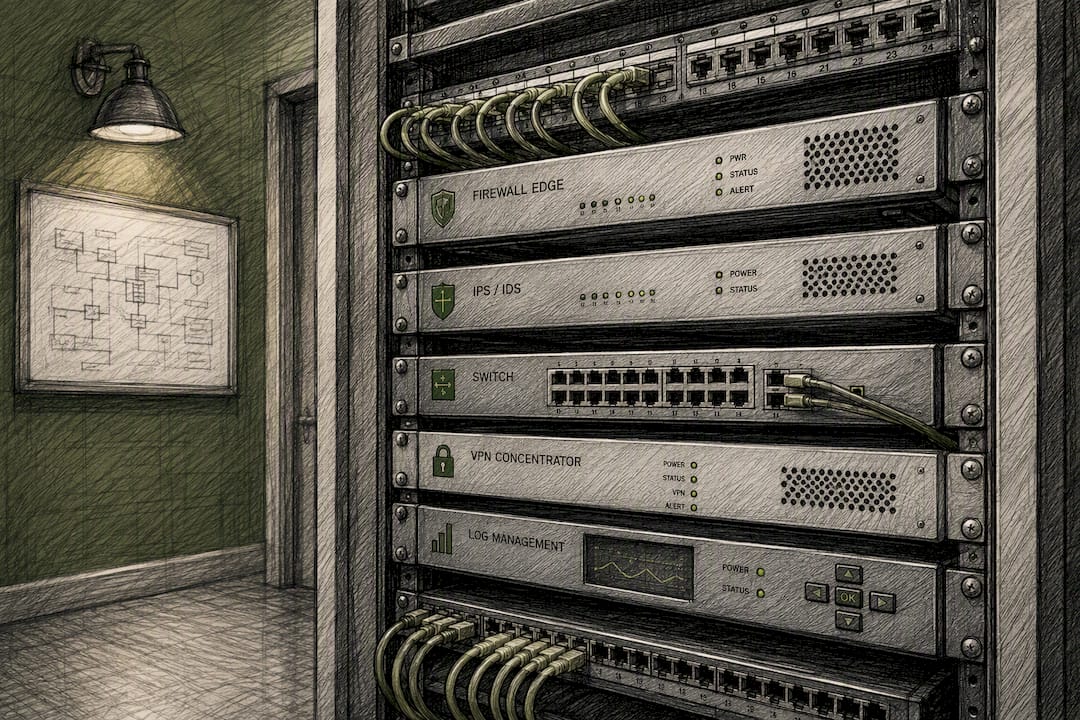
Technology costs cover endpoint detection and response (EDR) or antivirus, SIEM/SOAR platforms for log correlation, identity and access management (IAM), vulnerability scanners, software composition analysis (SCA) tools, and cloud agent licensing. Vulnerability management tools alone come in per-asset, per-IP, tiered, or subscription pricing, and scanning frequency changes the bill significantly, according to NinjaOne's cost guide.
Labor and operations are the part most SMBs underestimate: someone has to watch alerts at 2 a.m., someone has to remediate what the scanner finds, and someone has to onboard the new tool. Manual vulnerability triage eats a disproportionate share of analyst time, which is a hidden cost even when the software license looks cheap, per Swimlane's research.
- One-time costs: onboarding, initial risk assessment, tool implementation
- Recurring costs: monthly monitoring, license renewals, ongoing training, retainer fees
Pro Tip: Ask every vendor to separate their quote into one-time versus recurring line items. If they can't, that's a sign the pricing hasn't been thought through, and you'll likely see surprise charges at renewal.
Which Pricing Model Fits Your Business?
Cybersecurity vendors price services six different ways, and picking the wrong model for your situation is how per-device costs quietly triple as you grow.
Per-user and per-device pricing work well for predictable headcount but punish fast-growing companies, since every new hire or laptop adds to the bill automatically. Per-asset pricing suits companies with lots of servers or cloud instances relative to staff. Flat retainers give budget certainty and fit companies that want one predictable monthly number. Hourly billing makes sense for one-off projects like a single penetration test. Project-based pricing applies to larger compliance or architecture work with a defined scope and end date.
U.S. hourly rates for cybersecurity consulting commonly run $150 to $199 per hour, based on Clutch's 2026 pricing data. Rates run higher in major metros and lower in secondary markets, so a Pittsburgh-area quote will often undercut a New York or San Francisco equivalent for comparable work.
| Pricing model | Best for | Typical U.S. range |
|---|---|---|
| Per-user/device | Stable headcount | $10/user/month |
| Flat retainer | Predictable budgeting | $2,500–$10,000/month |
| Hourly | One-off projects | $150–$199/hour |
| Project-based | Compliance/audits | $10,000–$199,999 |
When quotes use different models, convert everything to an annual total cost of ownership, including onboarding fees and expected add-ons, before comparing. That conversion is the only way to compare a $3,000 flat retainer against a per-device quote that looks cheaper on paper but scales badly.
How Do You Build a Defensible Cybersecurity Budget?
Benchmarks tell you where you stand next to peers. They don't tell you what your business actually needs, which is why a risk-based method beats copying an industry average.
- Quantify your exposure. Run a basic annual loss expectancy (ALE) exercise: estimate the likelihood of a breach affecting a given system, multiply by the probable financial impact, and use conservative assumptions. You don't need actuarial precision, just a number leadership can react to.
- Map controls to risk reduction. List your current tools and any candidates on the table, then estimate how much each reduces your modeled exposure. This step usually reveals overlap, like two tools doing the same job at double the cost.
- Find the marginal-return inflection. Rank investments by risk reduction per dollar spent, and keep funding until the next dollar stops meaningfully lowering exposure. That inflection point is your defensible number.
The risk-based budgeting method Risk Aperture outlines puts average spend around 13% of IT budget, with regulated industries commonly running higher. Present your derived figure next to that benchmark. It answers the CFO's inevitable "how do we compare to others" question without abandoning the math behind your ask. A risk assessment framework built around this same logic gives you the documentation trail leadership expects before approving new spend.
How Can You Cut Costs Without Raising Risk?
The fastest savings usually come from cutting overlap, not cutting coverage. Consolidating vendors and toolsets reduces the licensing sprawl that inflates monthly bills without adding protection.
Automation and integrated platforms cut the analyst hours spent on manual triage, which is one of the largest hidden costs in vulnerability management. Co-managed models, where an internal IT person handles routine work and a specialist firm covers monitoring and incident response, split the cost load without leaving gaps overnight or on weekends.
- Consolidate overlapping tools into one platform where possible
- Automate alert triage to reduce analyst hours
- Negotiate onboarding fees down or phase them across two billing cycles
- Consider a co-managed arrangement instead of full outsourcing or full in-house staffing
Pro Tip: Before signing a multi-year contract, ask the vendor to phase the engagement, starting with a 90-day assessment period. It lets you measure actual time savings before locking into the full retainer.
What Should You Check Before Signing With a Vendor?
A vendor proposal that reads well on the surface can still hide costs or gaps that surface only after a breach. Run every quote through the same checklist.
- Confirm the scope in writing: which assets, users, and locations are covered, and which are excluded.
- Check SLA metrics, especially guaranteed incident response time, not just "response" in vague terms.
- Ask who performs remediation. Some contracts only cover detection and alerting, leaving you to fix the problem yourself.
- Review reporting cadence, onboarding fees, and termination terms before you sign anything.
Red flags include vague scope language, undisclosed per-incident rates buried in an appendix, no U.S.-based support for time-sensitive issues, and a vendor that can't produce client references. Bring these questions into any RFP: What's your average incident response time? Who owns remediation? What happens to pricing if our device count doubles next year?
A Local Perspective on Getting This Number Right
Most SMBs either overspend on tools they don't need or underspend and hope. Ventis Consulting Group works with small and mid-sized businesses across Pittsburgh and the surrounding region to close that gap: a baseline assessment, a prioritized remediation plan, and a 6 to 12 month spend roadmap that leadership can actually approve. Start with the assessment. The number gets easier once you know what you're protecting.
— Greg
How Ventis Consulting Group Helps You Get to a Real Number
Ventis Consulting Group is the practical alternative to guessing at a cybersecurity budget or overpaying for coverage you don't need. Instead of stacking disconnected tools and hoping they add up to protection, Ventis builds a single roadmap: a baseline assessment, a prioritized remediation plan, and managed monitoring that scales with your business rather than your headcount.

A typical engagement starts with an assessment that helps identify your specific exposure rather than relying on generic checklists. From there, you get a remediation plan ranked by risk reduction per dollar, plus ongoing monitoring and support so the plan doesn't sit in a drawer. If your phone systems and network infrastructure need a look too, Ventis's unified communications solutions fold into the same conversation instead of requiring a separate vendor relationship. Request a baseline assessment and budget review to see where your current spend actually stands.
Sources
- How Much Should You Spend on Cybersecurity? | Risk Aperture
- Cybersecurity Pricing Guide August 2026
- How Inefficiency Inflates Your Vulnerability Management Costs
- Vulnerability Management Software Cost Guide 2026