

If your card or personal data was exposed in a credit card breach, act now: contact your card issuer to lock or cancel the card, then place a fraud alert or credit freeze and report identity theft at Identitytheft if your personal information was misused. Every hour matters, but panic doesn't help. Here's the priority order.
- Call your issuer and lock or cancel the card. Ask about provisional credits and confirm zero-liability coverage.
- Document every suspicious charge with dates, amounts, and merchant names before disputing anything.
- Place a fraud alert or credit freeze with Equifax, Experian, and TransUnion. They serve different purposes, covered below.
- Report identity theft at IdentityTheft.gov if you suspect your Social Security number or personal details were misused.
- Keep a written log of every call, name, and confirmation number. You'll need it later.
Fraud alerts stay active for one year and are renewable, while credit freezes are free and remain in place until you lift them.
Key Takeaways
Fast issuer contact, fraud alerts or credit freezes, and a report at IdentityTheft.gov together determine how quickly and completely you recover from card exposure.
| Point | Details |
|---|---|
| Act on the card first | Lock or cancel the affected card and request a replacement number immediately. |
| Use freezes and alerts together | A fraud alert lasts one year; a credit freeze stays until you lift it. |
| Assume exposure after notice | Breaches are often disclosed months late, so monitor even without visible fraud. |
| Watch for partial-data scams | Callers quoting last-four digits are exploiting trust, not confirming legitimacy. |
| Businesses need a written plan | PCI DSS compliance and incident response planning limit customer fallout. |
Table of Contents
- What Is a Credit Card Breach and How Does It Happen?
- How Can You Tell if Your Card Was Compromised?
- What Should You Do Step-by-Step After a Breach?
- What Does Long-Term Recovery Look Like After a Breach?
- Why Are Partial Card Details and Personal Data So Dangerous?
- How Can You Reduce Your Exposure Going Forward?
- How Should Small Businesses Respond to Protect Customer Card Data?
- What Does the Data Actually Support Here?
- Sources
What Is a Credit Card Breach and How Does It Happen?
A credit card breach happens when unauthorized parties access payment card data, usually through a merchant, processor, or third-party vendor. That's distinct from a broader data breach, which might expose only names, emails, or addresses without touching card numbers at all. Exposed fields vary by incident: sometimes it's the full 16-digit number and expiration date, sometimes just billing addresses and partial card details.
Card data theft typically happens through a handful of well-worn paths:
- Point-of-sale malware or physical skimmers installed on card readers, common at gas pumps and small retailers.
- E-commerce server compromises, where attackers breach a website's backend and siphon transaction data.
- Third-party or API compromises, where a vendor connected to the merchant gets breached instead of the merchant itself.
- Stolen developer credentials, giving attackers a backdoor into systems that process or store payment records.
Many merchants never actually hold your full card number because of tokenization, a system where sensitive numbers get replaced with encrypted substitutes for storage and transmission. That's part of why the Payment Card Industry Data Security Standard (PCI DSS) exists: it sets the baseline for how merchants handle, store, and transmit cardholder data, and it's a big reason full-number theft has become rarer even as breaches keep happening.
How Can You Tell if Your Card Was Compromised?
Detection starts with your statements. Scan every line for unfamiliar merchants, especially small "test" charges of a dollar or two, which fraudsters often run first to confirm a card is live before making bigger purchases.
Beyond your statement, a few other checks matter:
- Pull your free credit reports from AnnualCreditReport.com and look for new inquiries or accounts you didn't open.
- Search your email address on a breach-notification service like Have I Been Pwned, and watch your inbox for official company breach notices.
- Treat any call or email quoting partial card details as suspicious rather than reassuring. Scammers often use last-four-digit numbers precisely because they sound legitimate.
Pro Tip: Don't wait for fraud to show up before you act. Companies frequently disclose breaches months after the actual compromise, so if you get a notification letter, assume your data is already circulating even if your statement looks clean.
What Should You Do Step-by-Step After a Breach?
Once you suspect exposure, work through this sequence without delay.
- Lock or cancel the affected card immediately and request a replacement with a new number. Most issuers can do this through their app or a single phone call.
- Dispute unauthorized charges in writing or through your issuer's online portal, and ask specifically about provisional credit while the investigation runs. The OCC's consumer guidance notes that banks are obligated to investigate disputed charges promptly, and zero-liability protections usually apply if you report fast.
- Place a fraud alert or credit freeze. A fraud alert tells lenders to verify your identity before opening new credit, lasts one year, and is free. A credit freeze blocks new creditors from pulling your credit report at all, which is stronger but requires you to lift it temporarily when you actually need new credit. You have to contact all three bureaus separately, though a request to one now triggers the others: Equifax, Experian, and TransUnion.
- File a report at IdentityTheft.gov. The site builds you a personalized recovery plan based on what was exposed, whether it's just card data or broader personal information.
- Preserve every piece of correspondence. Save emails, screenshot text alerts, and log every phone call with a date and reference number.
- Contact local law enforcement if identity theft is involved. A police report isn't always required, but it strengthens your case with creditors and can be necessary for certain disputes.
Fraud alerts and freezes solve different problems, so use both if you suspect broader identity exposure rather than a one-off card theft.
What Does Long-Term Recovery Look Like After a Breach?
Recovery doesn't end once the fraudulent charges get reversed. Pull your free credit reports periodically over the following months and scan specifically for new accounts, changed addresses, or inquiries you didn't authorize.
A few habits make the difference between a contained incident and a drawn-out mess:
- Renew your fraud alert before it expires at the one-year mark if you're still concerned about exposure.
- Keep your credit freeze in place until you actually need new credit, then lift it temporarily rather than removing it permanently.
- Decide between DIY recovery through IdentityTheft.gov's checklist and a paid identity restoration service. DIY works fine for most single-incident card fraud; paid services can help when your Social Security number or multiple accounts are involved.
- Harden your primary email account with a strong, unique password and two-factor authentication, since email access is often the key attackers need to reset other accounts.
Why Are Partial Card Details and Personal Data So Dangerous?
A breach doesn't need to expose your full card number to hurt you. Attackers routinely combine names, addresses, and fragments of payment data to build convincing pretexts for account takeover or new-account fraud.
Security researchers tracking recent incidents have found that partial card data, things like the last four digits and expiration date, functions as a trust signal in scams. Because that information sounds specific and hard to fake, it makes phishing calls and texts far more convincing than a generic "your account has an issue" message.
The technical failure points behind these leaks have shifted too. It's often not the card reader that gets hit anymore. It's a stolen API key, a compromised developer laptop, or a poorly secured third-party integration that lets attackers pull records programmatically.
Pro Tip: If someone contacts you quoting your last four digits and asks you to "verify" the rest, hang up and log into the merchant's site directly. Legitimate companies don't need you to read back a full card number they should already have on file.
How Can You Reduce Your Exposure Going Forward?
Prevention is mostly about friction. The harder you make it for a stolen credential to translate into real damage, the safer you are.
- Use virtual card numbers or single-use card generators for online purchases whenever your bank offers them.
- Turn on multi-factor authentication everywhere it's available, starting with your primary email account.
- Delete stored card numbers from merchant accounts you rarely use. A dormant account with saved payment info is just unmanaged risk.
- Set up transaction alerts through your banking app so you learn about a charge the moment it posts, not weeks later on a statement.
- Consider paid monitoring or identity restoration services if you've been notified in multiple breaches or your Social Security number was exposed.
Retailers and service providers connected to your accounts carry responsibility here too. Resources like SmishAlert's guide on smishing attacks break down how leaked customer data fuels the text-message scams that often follow a breach announcement.
How Should Small Businesses Respond to Protect Customer Card Data?
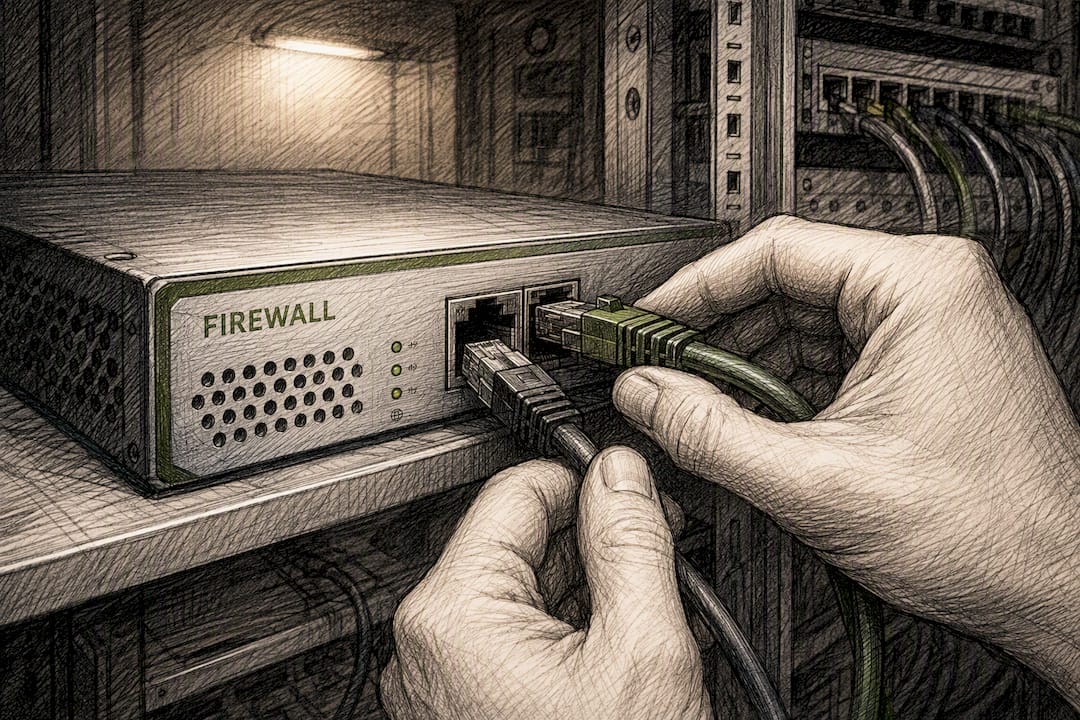
Consumers aren't the only ones who need a plan. Every business that processes payments is a potential breach target, and the response burden falls on the business the moment customer data is involved. Ventis Consulting Group works with small and mid-sized businesses across the Pittsburgh region on exactly this problem: cybersecurity assessments, managed detection and response, and incident response planning built around how real breaches actually unfold.
A short checklist for business owners handling card data:
- Confirm your point-of-sale and e-commerce systems meet PCI DSS requirements, not just at setup but on an ongoing basis.
- Build a written incident response plan before you need one, covering breach response steps and customer notification language.
- Understand what a breach actually costs your business in downtime, liability, and lost trust.
- Review how customer payment data is stored and tighten access controls across your retail or e-commerce environment.
| Point | Details |
|---|---|
| Notification timing | Disclose breaches promptly and clearly to limit customer exposure and legal risk. |
| Access controls | Restrict who can touch payment systems and audit vendor API access regularly. |
| Response planning | Have a written incident response plan before an incident forces you to improvise one. |
What Does the Data Actually Support Here?
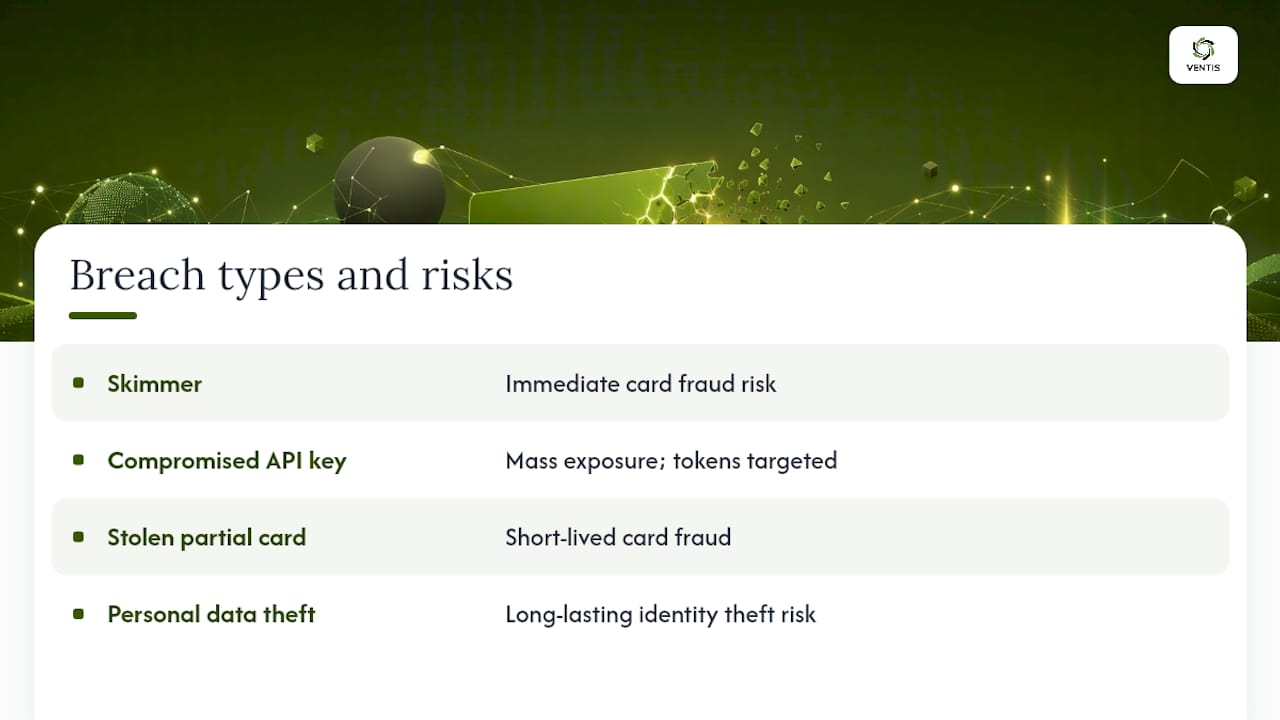
Most advice on breaches treats every incident the same, but the research says otherwise. A skimmer at a gas pump and a compromised API key at a payment processor create very different risk profiles, and treating them identically leads people to either overreact or underreact. The conventional wisdom, watch your statement and you're fine, misses that tokenization has already pushed attackers toward stealing personal information instead of raw card numbers, which means identity theft risk now often outlasts the card fraud itself.
What gets underrated is the timing gap. People wait for a fraudulent charge to appear before taking freezes and alerts seriously, but by the time that charge posts, your data has usually been circulating for weeks. Prioritize the freeze and the alert before you have proof, not after. That single sequencing change is what actually protects you.
Sources
- Data Breach Response: A Guide for Business | Federal Trade Commission
- Identitytheft
- U.S. fintech and data services firm 700Credit suffered a data breach impacting at least 5.6 million people
- Credit Card and Debit Card Fraud | OCC
- What to know about credit freezes and fraud alerts | FTC consumer information