

A data breach response is the immediate process of containing a security incident, investigating its scope, meeting legal notification deadlines, and restoring normal operations before damage compounds. Business owners who delay even a few hours face steeper financial penalties, greater reputational harm, and fewer legal defenses. A documented response plan is the single most effective tool for cutting that delay. This guide walks you through every critical phase so you can respond to a business data breach with confidence and compliance.
What immediate steps must you take to respond to a business data breach?
Speed and precision define the first hour. The wrong move, like shutting down an infected server, can destroy the forensic evidence you need to understand what happened and prove compliance to regulators.
Follow these steps in order:
- Isolate affected systems without powering them off. Disconnecting from the network stops the spread. Leaving systems running but isolated preserves volatile memory and logs that forensic investigators need to trace the breach vector.
- Assemble your incident response team. Assign clear roles before anyone starts making decisions. Your team should include IT, legal, HR, and a communications lead.
- Switch to out-of-band communication immediately. Attackers often monitor your primary email and messaging channels. Use a pre-established secure channel, such as an encrypted messaging app on personal devices, to coordinate your response.
- Start a detailed incident log. Record every action, timestamp, and observation from the moment of detection. This log becomes your legal and regulatory record.
- Engage legal counsel before any public statement. Premature disclosure carries serious legal risk. Notification timing and framing are regulated, and the wrong statement can create liability before you even understand the full scope.
- Preserve all evidence. Do not delete logs, emails, or system files. Treat the environment like a crime scene until forensic analysis is complete.
Pro Tip: Never reset passwords on a device you suspect is infected. If malware is still active, resetting credentials early hands the attacker your new password the moment you type it. Clear the malware first, then reset.
How do you investigate and assess the scope of the breach?

Once systems are isolated, your goal shifts to understanding exactly what happened. Guessing at scope leads to under-notification, which creates regulatory exposure, or over-notification, which causes unnecessary panic.
Key investigation steps include:
- Conduct forensic analysis on isolated systems. Capture memory dumps and preserve log files before any remediation begins. These records show the attacker's entry point, lateral movement, and data access patterns.
- Scan all employee devices for malware. Infostealers, a category of malware designed to silently harvest credentials and files, frequently spread from a single compromised endpoint to the broader network.
- Map every data set that was accessed or exfiltrated. Identify the data categories involved: personal identifiers, financial records, health information, or intellectual property. This mapping directly determines your notification obligations.
- Bring in external cybersecurity experts if your internal team lacks forensic capacity. A third-party incident response firm provides both technical depth and an independent record that regulators and insurers find credible.
- Use your findings to guide notifications. You cannot write an accurate breach notice until you know what data was affected, who owned it, and how it was accessed.
Pro Tip: Check cybersecurity threats specific to your industry before assuming a generic attack pattern. Mid-sized businesses face targeted tactics that differ significantly from enterprise-level attacks.
What are the legal and regulatory notification requirements you must follow?
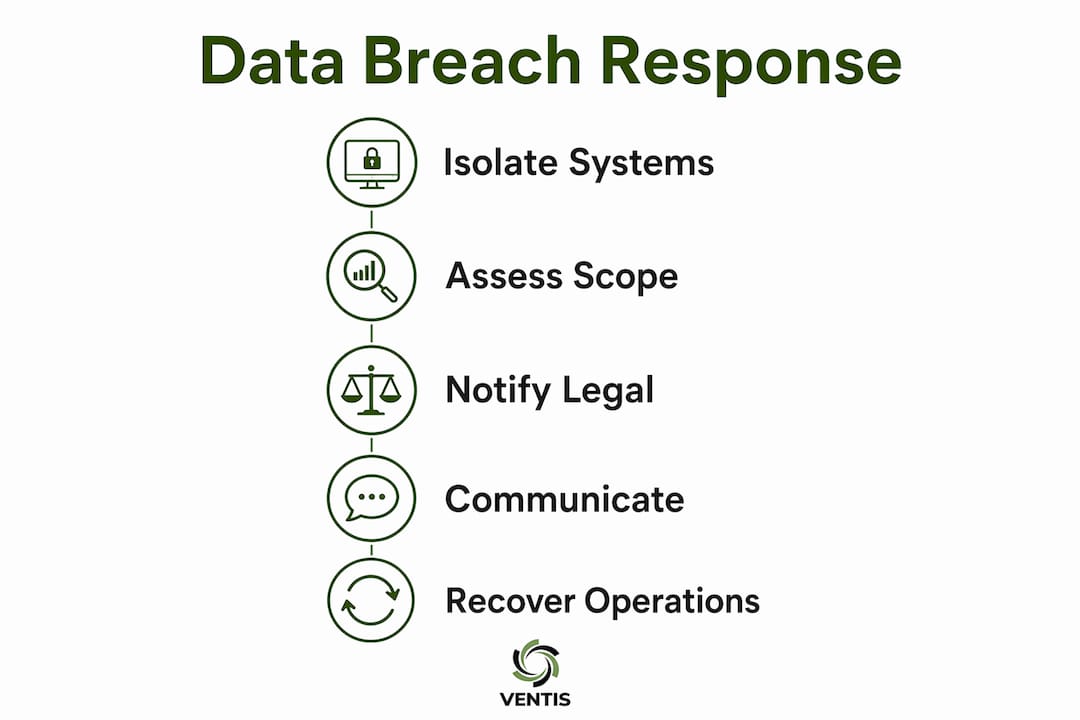
Notification law is not optional, and the deadlines are shorter than most business owners expect. Missing a filing window can turn a manageable incident into a regulatory enforcement action.
| Regulation | Who It Covers | Deadline | Key Requirement |
|---|---|---|---|
| GDPR Article 33 | Any business handling EU personal data | 72 hours from confirmation | Report to supervisory authority; notify individuals if high risk |
| HIPAA Breach Rule | US healthcare organizations | 60 days for 500+ affected | Notify HHS and, in some states, local media |
| CCPA/CPRA | Businesses handling California consumer data | Prompt, undefined | Statutory damages of $100–$750 per consumer per incident |
| State breach laws | Varies by state | Typically 30–90 days | Notify affected individuals and often the state attorney general |
Every notification, regardless of jurisdiction, should include:
- A plain-language description of what happened and when
- The specific categories of data involved
- The containment and remediation steps already taken
- Concrete instructions for affected individuals, such as placing a credit freeze or enabling multi-factor authentication
Specialized breach response attorneys help navigate overlapping obligations across multiple jurisdictions. Engaging one early prevents the costly mistake of filing an incomplete or premature notice.
How do you communicate breach details to customers and employees?
Honest, clear communication after a breach does more to protect your business reputation than any PR strategy. Customers who feel informed and supported are far more likely to stay loyal than those who learn about a breach from a news report.
Effective breach communication follows these principles:
- Use plain language throughout. Vague corporate language erodes trust instantly. Say exactly what data was accessed, not "certain information may have been involved."
- Apologize sincerely and show empathy. Acknowledge the impact on affected individuals without minimizing it. A genuine apology costs nothing and signals accountability.
- Offer concrete protective steps. Tell customers specifically what to do: enroll in credit monitoring, change passwords on any site where they reused the same credentials, and enable multi-factor authentication on key accounts.
- Train your customer support team before notifications go out. Customers will call. Representatives who cannot answer basic questions about the breach make the situation worse.
- Limit internal communication to need-to-know personnel. Sensitive details about the breach vector or legal strategy should not circulate broadly inside the organization.
For small businesses, a dedicated breach notification page on your website and a direct email to affected customers covers most communication requirements. Review website security best practices to confirm your notification infrastructure is itself secure before you use it.
Pro Tip: Draft your breach notification template before an incident occurs. Pre-approved language reviewed by legal counsel means you send accurate notices faster and avoid the panic-driven mistakes that create additional liability.
What are the best practices for eradicating threats and recovering operations?
Containment stops the bleeding. Eradication and recovery restore your business. Rushing either phase creates the conditions for a second breach.
- Remove malware before touching credentials. Confirm through forensic analysis that all malicious code is gone from every affected system. Then, and only then, reset passwords and revoke compromised access tokens.
- Patch the vulnerability that allowed entry. Whether the attacker exploited an unpatched application, a misconfigured firewall, or a phishing-compromised account, close that specific gap before bringing systems back online.
- Restore from clean, verified backups. Confirm your backup files predate the breach and have not been corrupted or encrypted by ransomware before restoring them to production.
- Monitor dark web sources and threat intelligence feeds. Stolen data frequently appears on criminal marketplaces within days of a breach. Early detection lets you warn affected customers before they experience fraud.
- Review and update your security policies. Every breach reveals a gap. Document what failed, update your incident response plan, and schedule a post-incident review within 30 days.
- Evaluate cyber insurance coverage. If you do not carry a policy, a breach is the clearest possible signal that you need one. If you do carry coverage, notify your insurer promptly because late notification can void claims.
A documented breach response plan reduces containment time and operational disruption significantly. Organizations that practice their response procedures before an incident recover faster and with less internal chaos.
Key Takeaways
The most effective way to respond to a business data breach is to isolate systems immediately, engage legal counsel early, meet all regulatory deadlines, and communicate honestly with affected customers.
| Point | Details |
|---|---|
| Isolate, don't shut down | Keep compromised systems running but disconnected to preserve forensic evidence. |
| Legal counsel first | Engage a breach response attorney before making any public statement or filing any notice. |
| Know your deadlines | GDPR requires notification within 72 hours; HIPAA allows 60 days for large healthcare breaches. |
| Communicate plainly | Name the data affected, the steps taken, and the actions customers should take. |
| Eradicate before resetting | Remove all malware from infected devices before resetting any passwords or credentials. |
What I've learned from watching businesses handle breaches badly
The most damaging mistakes I see are not technical. They are procedural. A business owner discovers a breach on a Friday afternoon, panics, shuts down every server, and calls a PR firm before calling a lawyer. By Monday, they have destroyed the forensic evidence, missed the GDPR 72-hour window, and issued a public statement that their attorney would never have approved.
The businesses that handle breaches well share one trait: they prepared. They had a written, pre-approved response plan that told every team member exactly what to do in the first hour. They had legal counsel on retainer. They had practiced their notification process at least once. When the breach hit, they executed the plan instead of improvising.
The second pattern I see is underestimating the communication phase. Business owners spend enormous energy on technical remediation and almost none on what they will say to customers. A technically perfect response paired with a cold, jargon-filled notification letter still destroys customer trust. Plain language and genuine empathy are not soft skills. They are breach response requirements.
Invest in your cybersecurity and business continuity posture before a breach forces your hand. The cost of preparation is a fraction of the cost of an unplanned response.
— Greg
Ventis Consulting Group is ready when you need breach response support
A breach does not wait for a convenient moment. Ventis Consulting Group works with small and mid-sized businesses in Pittsburgh and the surrounding region to build the IT infrastructure and response plans that make incidents manageable rather than catastrophic.

Ventis Consulting Group provides managed IT services, cybersecurity assessments, and incident coordination support tailored to your business size and risk profile. Whether you need help building a response plan before an incident or need hands-on support after one, the team is ready to help. Review the managed IT service options to find the right level of support for your organization and get a conversation started today.
FAQ
What is the first thing to do after a data breach?
Isolate affected systems from the network without shutting them down, then assemble your incident response team and engage legal counsel before making any public statement.
How long do you have to report a data breach?
GDPR requires notification to the supervisory authority within 72 hours of confirming a breach. HIPAA gives healthcare organizations 60 days for breaches affecting 500 or more individuals, and state laws vary from 30 to 90 days.
Should you reset passwords immediately after a breach?
No. Reset passwords only after confirming that malware has been fully removed from all affected devices. Resetting credentials on an infected machine hands the attacker your new password.
What information must a breach notification include?
A breach notification must describe what happened, identify the specific data categories affected, explain the containment steps taken, and provide concrete protective actions for affected individuals.
Do small businesses need a data breach response plan?
Yes. Organizations without a pre-approved written plan experience longer containment times and greater operational disruption. A plan does not need to be complex. It needs to assign roles, define communication channels, and outline the first six hours of response.