

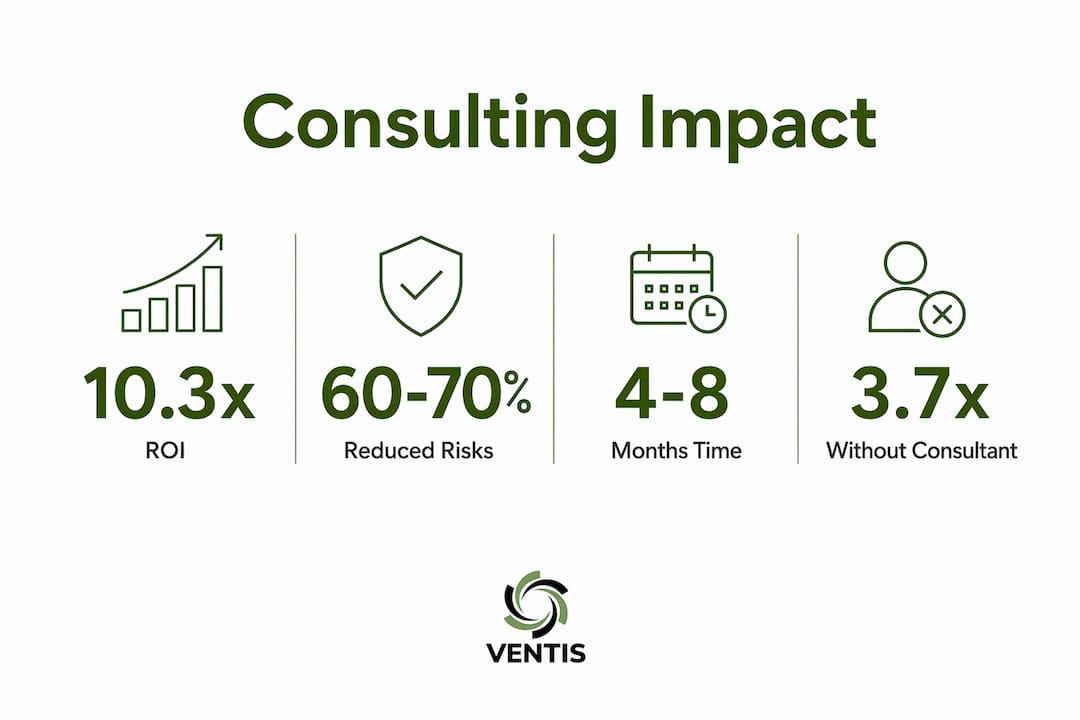
Technology consultants are strategic advisors who translate complex technical decisions into measurable business outcomes. For small to mid-sized companies, understanding why businesses need technology consultants often means the difference between a costly failed project and a system that actually works. Technology consulting partnerships yield a 10.3x ROI compared to 3.7x when companies go it alone. That gap is not a rounding error. It reflects the real cost of guessing your way through infrastructure decisions, software migrations, and cybersecurity planning without a guide who has done it before.
Why businesses need technology consultants: the core benefits
The industry term for this discipline is IT advisory or technology advisory services. You may also hear it called business technology consulting. Whatever the label, the function is the same: an outside expert helps you make better technology decisions faster and with less financial risk.
The benefits are specific and measurable. Consulting accelerates time to value from 12–18 months on your own down to 4–8 months with a partner. That is not just a faster timeline. It means your team is productive on the new system months sooner, and you stop paying for the old one sooner too.

User adoption tells a similar story. Without consulting support, user adoption rates on new technology platforms average 35–45%. With proper change management from a consultant, adoption rates climb to 75–90%. A system your team does not use is a system you wasted money on.
Here is what the benefits of technology consulting look like in practice:
- Higher project success rates. 70% of technology projects fail without consulting support. With it, success rates exceed 70%.
- Risk identification before it costs you. Consultants audit your current setup and flag problems before they become budget emergencies.
- Strategic roadmaps. A good consultant acts as a fractional CTO, translating your growth goals into a realistic technology plan.
- Vendor-neutral guidance. You get recommendations based on your needs, not a partner quota.
Pro Tip: Ask any prospective consultant to show you a project where they advised a client NOT to buy a specific tool. That answer tells you whether they are truly independent or just selling.
How do tech consultants handle cloud migrations and complex projects?
Cloud migrations are where the importance of tech consultants becomes impossible to ignore. 60–70% of cloud migrations exceed their budgets due to poor planning. The culprit is almost always the same: companies skip the infrastructure audit and workload profiling steps because they seem slow and expensive upfront. They are not. Skipping them is what gets expensive.
A consultant audits your existing infrastructure, models realistic migration paths, and identifies which workloads are actually cloud-ready. That process prevents the most common and costly mistake in cloud projects: oversizing your solution and paying for capacity you will never use.
System integration is the other major risk area. 84% of system integration projects fail or partially fail without proper planning and execution support. Disconnected systems and data silos cost businesses millions annually in lost productivity. A consultant maps how your systems need to talk to each other before anyone writes a line of code or signs a contract.
Here is a direct comparison of what project outcomes look like with and without consulting support:
| Factor | Without a consultant | With a consultant |
|---|---|---|
| Budget overruns | Common (60–70% of cloud projects) | Reduced through upfront auditing |
| Time to value | 12–18 months | 4–8 months |
| User adoption | 35–45% | 75–90% |
| Integration failure rate | Up to 84% | Significantly lower with planning |
| Project success rate | Below 30% | Above 70% |
Pro Tip: Engage your consultant before you finalize your budget, not after. The audit phase is where the real savings happen. If a consultant joins after you have already committed to a vendor, half the value is already gone.
For more on cloud migration planning, the Ventis Consulting Group blog covers the specific steps that prevent cost overruns.
When should you hire a consultant vs. handle IT internally?
Strategic consulting is distinct from routine IT management. Confusing the two is one of the most common and expensive mistakes small businesses make. Your internal IT team or managed service provider handles day-to-day support, patching, and helpdesk work. A technology consultant handles decisions: which platform to buy, how to migrate, what your architecture should look like in three years.
You need a consultant when the stakes are high and the internal expertise is not there. Specific scenarios that justify bringing one in include:
- ERP implementations. These are complex, expensive, and notoriously prone to failure without expert guidance.
- Cloud migrations. As the budget overrun data shows, planning is everything.
- Cybersecurity overhauls. A consultant can assess your current posture and build a realistic remediation plan.
- Major digital transformations. Any project that touches multiple departments and requires significant change management.
Before you hire, ask yourself three questions. First, does your team have the specific expertise this project requires? Second, do you have a clear internal owner who will manage the consultant's work? Third, can you define what success looks like in measurable terms?
If you cannot answer all three, you are not ready to get full value from a consulting engagement. Read more about when to hire a consultant versus managing IT internally before you commit.
Pro Tip: Avoid open-ended engagements with no defined end state. Consulting value is highest when the scope is specific. Vague projects create dependency, not results.
What best practices maximize value from a consulting engagement?
Getting the most from technology consulting for growth requires more than hiring the right firm. How you manage the engagement determines whether you capture the ROI or leave it on the table.
The single most important factor is having a dedicated internal owner. Successful consulting engagements require an internal owner who manages deliverables, holds the consultant accountable, and drives implementation on your side. Without that person, consultants fill the vacuum and you pay for project management you should be doing yourself.
Define success metrics before the engagement starts. "Improve our systems" is not a metric. "Reduce invoice processing time from 4 days to 1 day by Q3" is. Consultants perform better when they know exactly what they are being measured against.
Plan for knowledge transfer from day one. Internal staff time and project overhead often exceed consultant fees. If you do not plan for your team to absorb the consultant's knowledge during the engagement, you will need to hire them again for the next project.
Vendor independence is non-negotiable. Many consulting firms carry partner quotas that bias their recommendations toward specific vendors. Require any consultant you hire to disclose their vendor relationships upfront. True advisory value comes from unbiased advice, including advice to do nothing or to use a tool the consultant does not profit from recommending.
A practical checklist for managing the engagement:
- Assign a named internal project owner before the consultant starts.
- Define 3–5 measurable success criteria in the contract.
- Schedule knowledge transfer sessions monthly, not just at project close.
- Require a written conflict-of-interest disclosure from the consultant.
- Budget for internal stakeholder time, not just consulting fees.
For a detailed look at how consulting engagements work from kickoff to close, the Ventis Consulting Group blog has a full breakdown.
Key takeaways
Technology consulting delivers its highest value when businesses treat it as a strategic partnership, not a one-time fix.
| Point | Details |
|---|---|
| ROI gap is significant | Consulting partnerships yield 10.3x ROI vs. 3.7x without external expertise. |
| Cloud projects need upfront planning | 60–70% of cloud migrations exceed budget; an audit before commitment prevents most overruns. |
| User adoption drives real value | Adoption rates jump from 35–45% to 75–90% with proper change management support. |
| Internal ownership is required | Every engagement needs a dedicated internal owner to manage deliverables and hold consultants accountable. |
| Vendor neutrality protects your budget | Require consultants to disclose vendor relationships before they make any recommendations. |
What I have learned about consulting after years in the field
The businesses that get the most from technology consulting are not the ones with the biggest budgets. They are the ones that treat the engagement like a partnership rather than a transaction.
I have seen companies spend six figures on a consulting engagement and walk away with a report that sits in a drawer. The reason is almost always the same: no internal owner, no defined success metrics, and no plan for what happens after the consultant leaves. The consulting was fine. The management of it was not.
The other pattern I keep seeing is businesses that wait too long to bring in outside help. They try to handle a cloud migration or an ERP implementation internally, run into trouble six months in, and then call a consultant to fix the mess. That is the most expensive way to use consulting. Early engagement, before the contracts are signed and the architecture is locked in, is where the real leverage is.
The role of technology consultants is shifting too. The best ones today are not just technical experts. They understand your business model, your growth targets, and your team's capacity for change. That combination of technical depth and business context is what separates a good consultant from a great one. If the person you are talking to cannot explain their recommendation in plain business terms, keep looking.
— Greg
How Ventis Consulting Group can help your business
If you are weighing whether to bring in outside technology expertise, you do not have to figure it out alone.
Ventis Consulting Group works with small to mid-sized businesses in Pittsburgh and the surrounding area to provide managed IT and consulting services that are practical, vendor-neutral, and built around your specific needs. Whether you are planning a cloud migration, evaluating your cybersecurity posture, or just trying to get your systems to work together, the team at Ventis Consulting Group brings the same consultative approach that the research consistently shows drives better outcomes. Reach out to Ventis Consulting Group to start a conversation about what your technology should actually be doing for your business.
FAQ
What is the ROI difference with a technology consultant?
Technology consulting partnerships deliver a 10.3x ROI compared to 3.7x when businesses manage technology projects without external expertise. That gap reflects avoided failures, faster implementation, and higher user adoption.
How do tech consultants help with cloud migrations?
Consultants audit your infrastructure and model migration paths before you commit to a vendor or architecture. This upfront work directly addresses why 60–70% of cloud projects exceed their budgets.
When does a small business need a technology consultant?
Hire a consultant for high-stakes, one-time decisions: ERP implementations, cloud migrations, cybersecurity overhauls, or any project that requires expertise your internal team does not have. Routine IT support is a separate function.
What is the difference between IT support and technology consulting?
IT support handles day-to-day operations like helpdesk tickets, patching, and network monitoring. Technology consulting is strategic advisory, focused on decisions about architecture, platforms, and long-term technology direction.
How do you avoid dependency on a technology consultant?
Assign an internal project owner from day one, define measurable success criteria upfront, and schedule regular knowledge transfer sessions throughout the engagement. Planning for the consultant's exit before they start is the most effective way to retain the value they create.